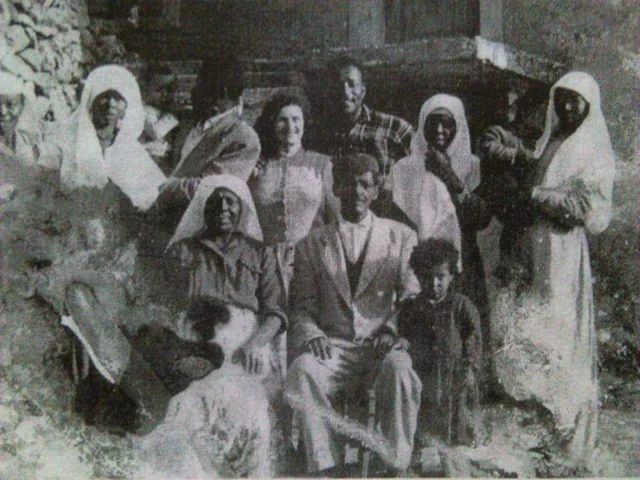
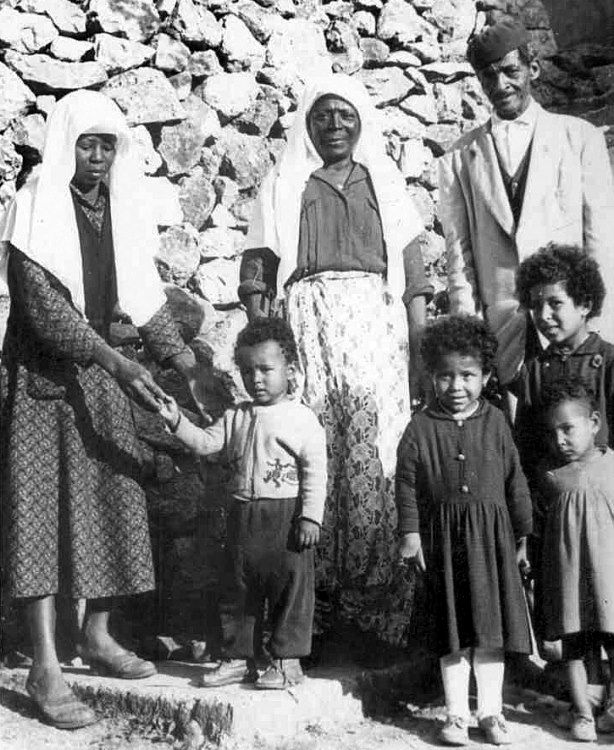
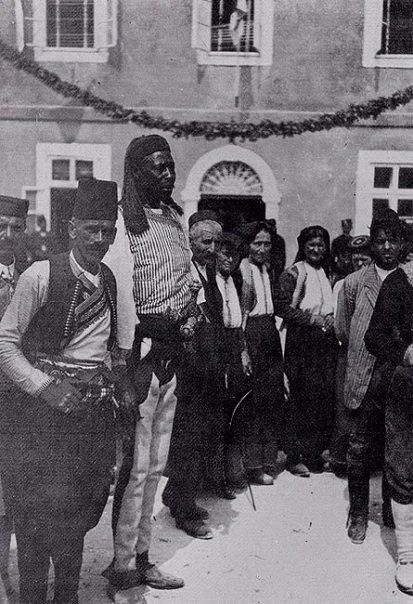
At the end of the 18th and the beginning of the 19th century, Ulcinj sailors brought young Africans from their travels, who worked as slaves on ships or in Ulcinj’s olive groves.
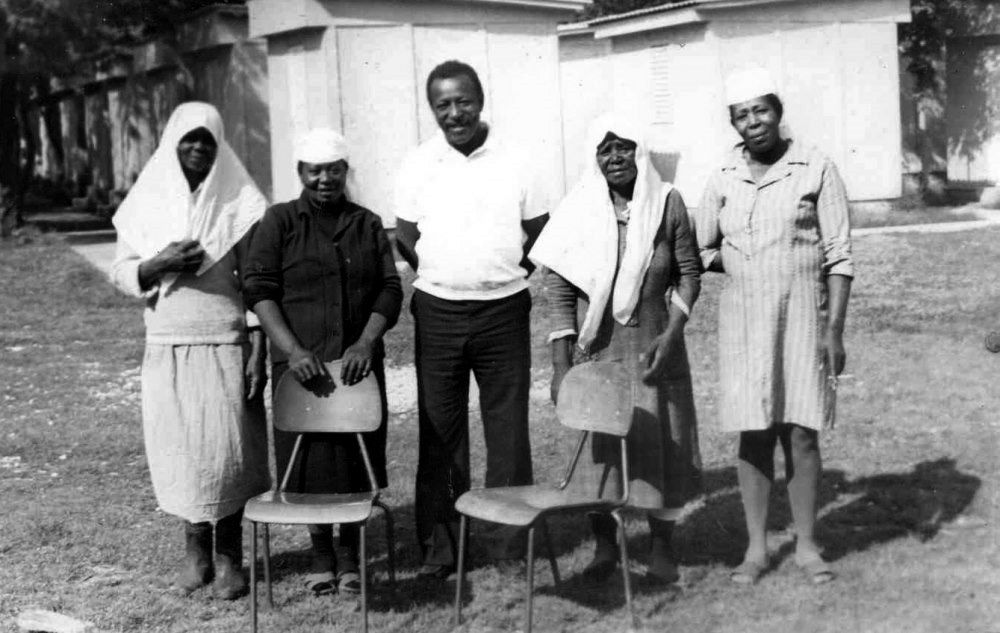
The Afro-Ulcinj community originated from Africa, mainly from Sudan, Chad, and Ethiopia. They were purchased by Ulcinj sailors in various ports, such as Alexandria, Port Said, Tripoli, and others.
After a certain period, many of them became free citizens with all the rights and responsibilities that entailed. They often took the surnames of the captains who brought them or for whom they worked, or simply bore the surname “Arap,” which in Albanian means “black.”
Some Afro-Ulcinj residents became well-known captains, owning their own ships and homes in the town center. By the end of the 19th century, the community had grown to around 100 people.
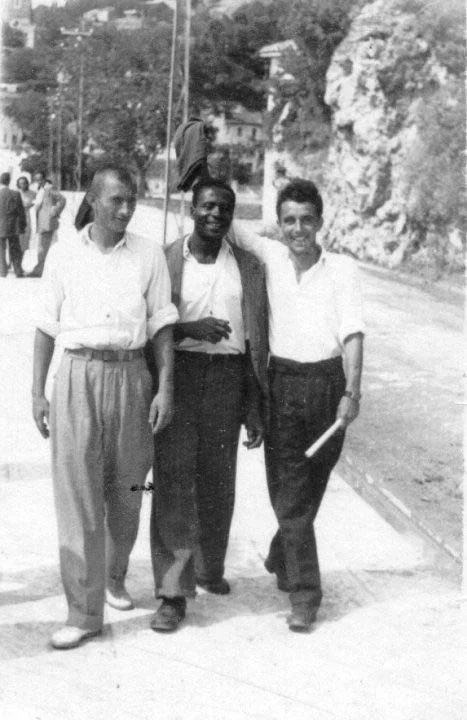
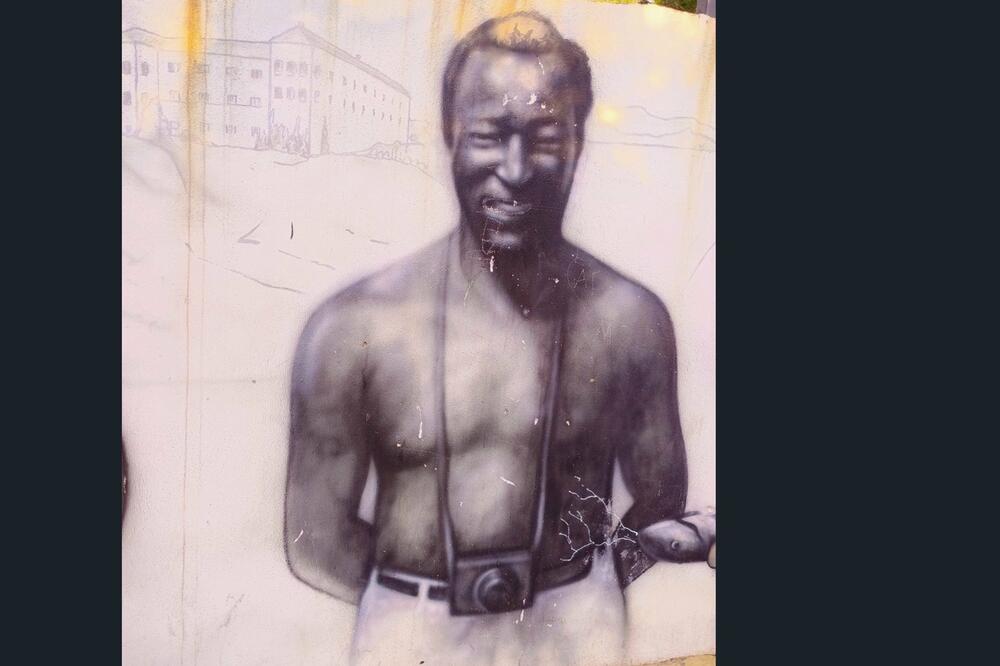
The most famous Afro-Ulcinj resident of the 20th century was Rizo Šurla, a photographer from Pristan.
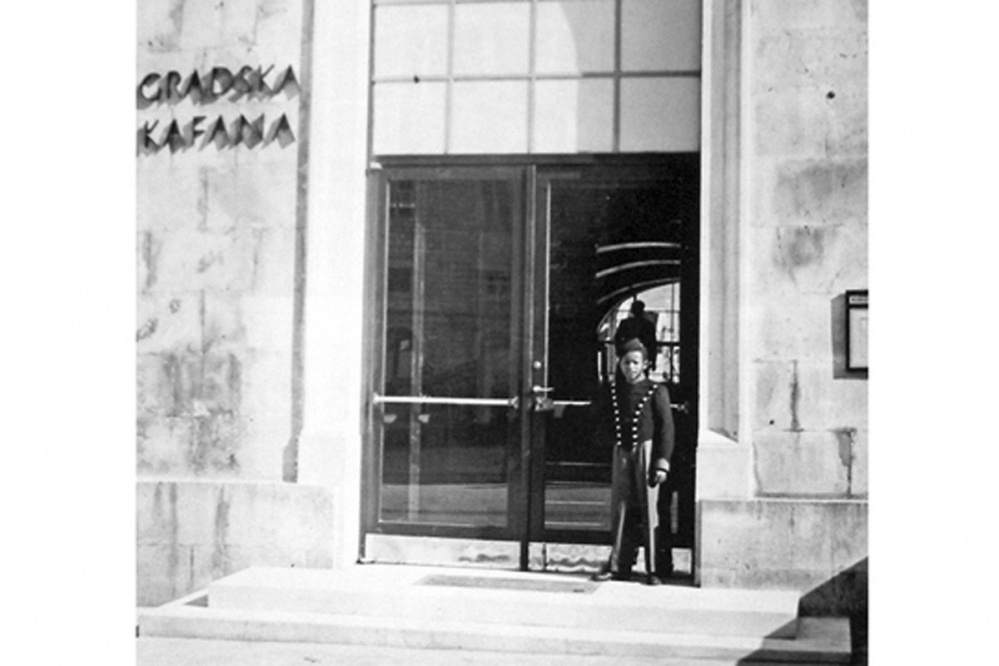
He lived in Ulcinj with seven siblings, and his father had been brought from Tripoli at the age of twelve. As a child, Rizo was taken to Dubrovnik, where he became something of a mascot in a local café. By the age of ten or eleven, he was already opening the doors of the city café.
After a brief stay in Belgrade, where he learned the art of photography, Rizo returned to Ulcinj and opened the town’s first photographic studio, which remained the only one for many years.
He is also remembered as an actor in films of the former Yugoslav cinema.
Rizo Šurla passed away on February 11, 2003, in his hometown of Ulcinj. He was one of the last members of the city’s black families, and the town honored him with a mural at Pristan.